Utility Billing
Michigan Solar Inflow and Outflow: Why Production Alone Does Not Explain Your Bill
Your system's production total does not show how much electricity you bought, how much you exported or which credit applied.
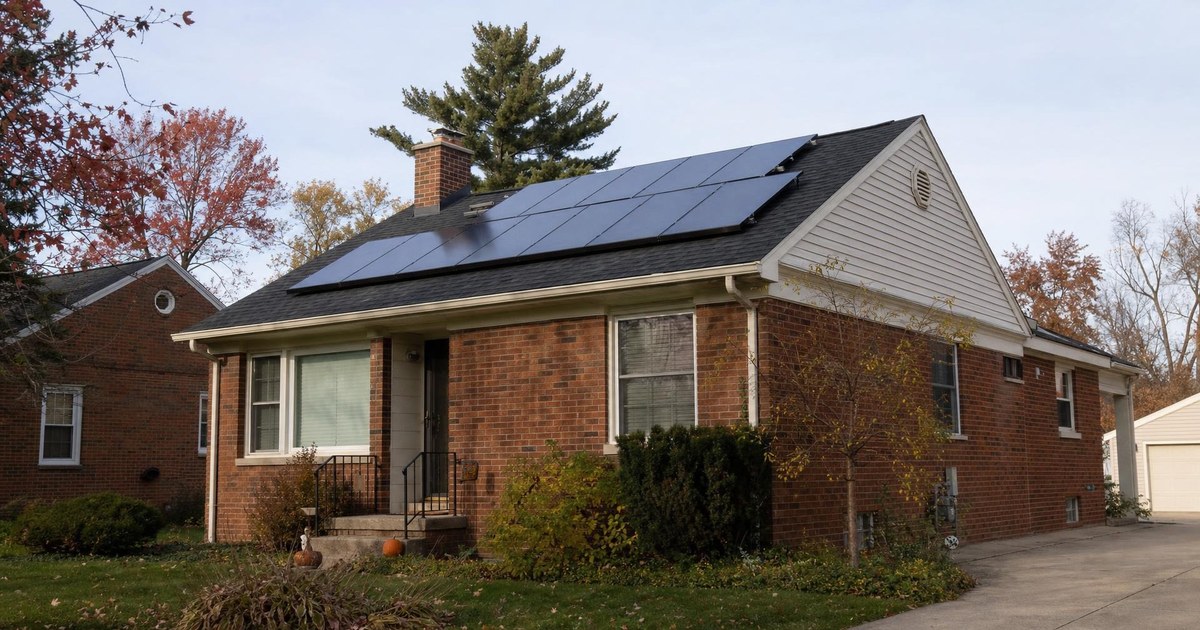
When a Michigan solar app shows strong production but the electric bill remains substantial, the missing explanation may be how the bill treats imports and exports. The distributed-generation framework uses an inflow/outflow approach, with utility-specific tariffs setting the charges and credits.
The distinction is useful when reviewing a sales estimate that treats every generated kilowatt-hour as if it removed the same amount from the bill. Production, electricity consumed at home and exports are different quantities.
Follow the electricity before comparing dollars
Inflow is electricity delivered by the utility. Outflow is generation that the home does not use and sends to the utility. Electricity generated and consumed onsite does not become outflow simply because it appears in the solar app.
The MPSC identifies its inflow/outflow pricing decision in Case U-18383. Its current distributed-generation page also identifies utility-specific tariff revisions approved in March 2025 following Public Act 235. Those changes do not create one universal Michigan export price. |
Start with the utility and rate plan named on your bill. Then identify whether the account uses a current distributed-generation rider or an older net-metering arrangement. Do not assume a friend's DTE bill describes your Consumers Energy account, or that either company's tariff governs a municipal or cooperative customer.
A Consumers Energy example
Consumers Energy's C11.3 tariff bills inflow under the customer's retail schedule. For full-service customers, the outflow credit uses the schedule's power-supply rates, including transmission, plus the applicable Power Supply Cost Recovery factor. Its residential credit table distinguishes rate plans, seasons and time periods. The retrieved C-64.30 sheet is effective May 1, 2026.
Two points deserve separate attention. How a credit is calculated is one question; which bill charges it can offset is another. The same tariff permits credits against eligible electric charges but excludes specified securitization charges. Unused eligible credits can carry forward. Do not turn a power-supply-based credit formula into a claim that the credit can only offset the power-supply line.
This is a Consumers Energy example. It does not establish DTE's precise credit components or any other provider's exclusions.

Ask what the forecast assumed about timing
Imagine a home that produces heavily while its occupants are away and uses more electricity after they return. An annual total can look favorable even when the household still purchases considerable electricity at other times. The financial outcome depends on the applicable import and export prices, not just whether annual production equals annual consumption.
Ask the seller to show onsite consumption and exports separately. If the rate has time periods, ask how the model assigns electricity to them. An estimate based on one average price may obscure a plan-specific difference.
The same review should retain fixed and ineligible charges. A forecast that removes the entire historical bill whenever production matches usage needs an explanation of how each remaining charge was handled.
Check an expansion before relying on old treatment
Consumers Energy's tariff states that increasing aggregate generation after its distributed-generation program took effect moves an existing net-metering customer's onsite generation into the distributed-generation terms. That makes the existing account history relevant before adding panels. Ask the utility to confirm the effect of the proposed change rather than relying on the installer's description alone.
Do not assume an expansion is the remedy for a disappointing bill. First determine whether the gap comes from production, household use, the credit calculation or an incorrect forecast. Additional equipment introduces additional costs and requires its own evaluation.
Put the evidence beside the contract
Collect the proposal, production reports, utility bills, rider and any later system-change approval. Use matching dates to reconstruct one representative bill, then compare the complete year. Preserve any written statement promising that solar would eliminate the utility bill.
Bring that record to Solar Exit's billing review and contract review. The review should distinguish a billing explanation from a contract claim; neither establishes a guaranteed outcome by itself.
General consumer information, not legal, tax or electrical advice. Utility tariffs and individual agreement terms control.
Sources Reviewed
- MPSC distributed generationReviewed October 15, 2026Reverified October 15, 2026. MPSC program and rate-design records establish U-18383 inflow/outflow and March 13, 2025 utility-specific PA235 approvals. Consumers Energy C11.3: C-64.10 effective March 14, 2025; C-64.20 April 4, 2025; Eighth Revised C-64.30 May 1, 2026, U-21870. Direct rate book read for expansion, power-supply plus PSCR credit and specified securitization exclusions. No universal export rate or DTE credit claim.
- MPSC rate-design recordReviewed October 15, 2026Reverified October 15, 2026. MPSC program and rate-design records establish U-18383 inflow/outflow and March 13, 2025 utility-specific PA235 approvals. Consumers Energy C11.3: C-64.10 effective March 14, 2025; C-64.20 April 4, 2025; Eighth Revised C-64.30 May 1, 2026, U-21870. Direct rate book read for expansion, power-supply plus PSCR credit and specified securitization exclusions. No universal export rate or DTE credit claim.
- Consumers Energy electric rate book, C11.3Reviewed October 15, 2026Reverified October 15, 2026. MPSC program and rate-design records establish U-18383 inflow/outflow and March 13, 2025 utility-specific PA235 approvals. Consumers Energy C11.3: C-64.10 effective March 14, 2025; C-64.20 April 4, 2025; Eighth Revised C-64.30 May 1, 2026, U-21870. Direct rate book read for expansion, power-supply plus PSCR credit and specified securitization exclusions. No universal export rate or DTE credit claim.